.png)
Best Hair Extensions for Fine Hair Clip Ins Tape Ins Hand Tied and K Tip Guide

Fine hair can make extensions feel tricky. Add too much hair and the result looks bulky. Choose the wrong attachment method and the bonds may show. Pick a shade that is slightly off and the difference can be obvious, especially under natural light.
The good news is that fine hair can wear extensions beautifully. The key is choosing a method that adds softness and fullness without too much weight or tension. Clip-ins, tape-ins, hand tied extensions, and k-tip extensions can all work for fine hair, but they suit different routines, budgets, and hair goals.
This guide breaks down the main options, the pros and cons of each, and what to think about before booking an appointment or buying a set.
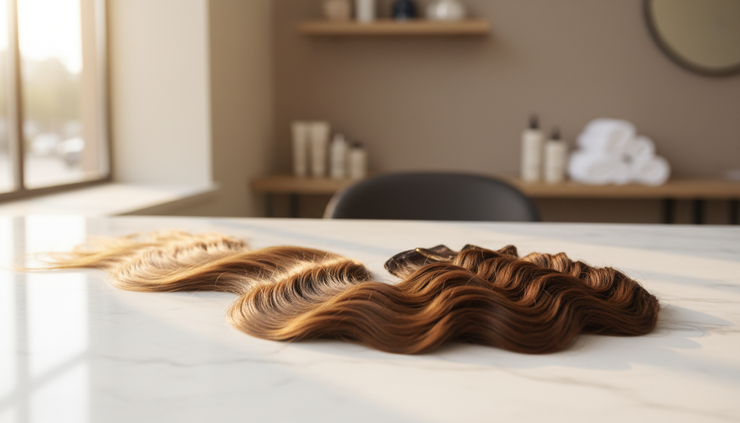
What fine hair needs from extensions
Fine hair is about the size and feel of each strand. It can be dense or sparse, but each individual hair is usually smaller in diameter. That makes extension choice more specific.
The best extensions for fine hair usually have three things in common:
Low weight
Heavy wefts or thick bundles can pull on fragile strands.
Flat, discreet attachments
Clips, tapes, beads, or bonds should stay hidden when the hair moves.
Flexible placement
Fine hair often needs custom spacing so extensions blend without showing near the crown, temples, or part line.
It also helps to be honest about the goal. Adding a little fullness around the sides is very different from trying to go from shoulder-length hair to waist-length hair overnight. The more dramatic the change, the more hair is needed, and the harder it can be to keep everything invisible.
For many people with fine hair, the most flattering result is not the longest result. It is the one that moves like natural hair.
How the main extension types compare for fine hair
Each method has a place. Some are better for occasional wear, while others are better for daily length and volume. The right choice depends on hair density, lifestyle, styling habits, and how much upkeep feels realistic.
Extension type | Best for fine hair when | Watch out for |
Clip-ins | You want temporary volume for special days | Clips can show or feel heavy if the set is too thick |
Tape-ins | You want semi-permanent fullness with a flat attachment | Oils and poor placement can cause slipping |
Hand tied extensions | You want soft, natural movement and custom fullness | The row must be installed with low tension |
K-tip extensions | You want detailed, strand-by-strand blending | Bonds need careful placement and removal |
A fine hair extension plan should start with a consultation if the method is permanent or semi-permanent. A stylist can check strand strength, density, scalp sensitivity, and breakage patterns. That matters because the same method can feel weightless on one head of hair and too heavy on another.
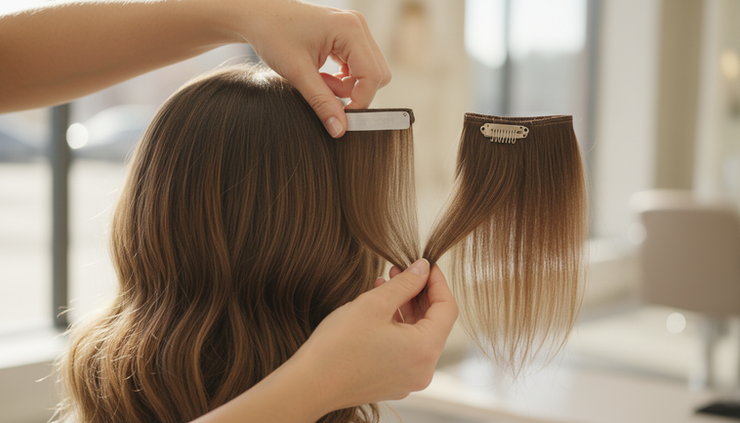
Clip-in extensions give flexible volume without commitment
Clip-ins are the easiest way to try extensions. They come as wefts with small clips attached, and they can be put in and removed at home.
For fine hair, clip-ins work best when they are lightweight and not overly wide. A full, heavy set may look tempting in the package, but it can create a shelf-like shape if natural hair is not dense enough to cover it.
Why clip-ins can work well
Clip-ins are great for occasional wear. They can add volume for weddings, photos, dinners, or days when the hair needs extra body. Since they come out at night, they do not place constant tension on the roots.
They are also useful for testing a length or color before choosing a more permanent method. If long extensions feel too heavy as clip-ins, they may also feel too heavy in a bonded or wefted method.
Best uses for fine hair
Adding fullness to curled styles
Filling in the side areas
Creating a fuller ponytail or half-up style
Trying extensions before committing to salon installation
The drawbacks of clip-ins
Clips need enough natural hair above them to stay hidden. On very fine or low-density hair, they can peek through when hair separates or moves. They can also feel uncomfortable if placed too close to the scalp or worn for too many hours.
Clip-ins should not be slept in. Sleeping with them can cause tangling, pulling, and breakage.
Fine hair tips for clip-ins
Choose a lighter set rather than the thickest set available. If the ends look too dense, a stylist can trim and blend the extensions so they look more natural. For better grip, lightly tease the root where the clips will sit, then smooth the top layer over them.
Tape-in extensions are flat and popular for fine hair
Tape-ins are one of the most common choices for fine hair because the attachment lies flat. Each section usually sandwiches a thin slice of natural hair between two adhesive wefts.
The flat design can make tape-ins easier to hide than clips or bulky wefts. They also spread weight across a wider area, which can feel comfortable when installed correctly.
Why tape-ins can be a smart choice
Tape-ins can create a soft, natural look without the bulk of some other methods. They work especially well for adding fullness through the mid-lengths and ends.
They are also reusable in many cases. During maintenance appointments, a stylist removes the extensions, refreshes the adhesive, and moves them back up closer to the root as the hair grows.
Best uses for fine hair
Everyday volume
Soft length increases
Blending blunt ends
Filling in thin side sections
The drawbacks of tape-ins
Tape-ins need careful product use. Oils, heavy conditioners, and silicone-rich products near the adhesive can cause slipping. Fine hair can also become oily faster, so placement and aftercare matter.
If tape-ins are placed too high, too close to the hairline, or in sections that are too thin, they may show. Removal should always be gentle. Pulling or rushing the process can damage fine strands.
Fine hair tips for tape-ins
Ask for small, clean sections and conservative placement near the crown and temples. Keep conditioners and styling creams away from the tape tabs. Brush daily with an extension-safe brush while supporting the root with one hand.
Hand tied extensions can look soft and natural when installed well
Hand tied extensions use thin wefts sewn onto a foundation created with beads and thread. The term “hand tied” often refers to the type of weft, but people also use it to describe the row method.
For fine hair, this method can be beautiful when the wefts are lightweight and the row placement is customized. It can add fullness with a soft, flowing look.
Why hand tied extensions can work
Hand tied wefts are usually thinner and more flexible than machine wefts. That helps them lay closer to the head. They can also create a blended shape because the stylist controls where each row sits.
This method often suits people who want fuller hair every day and do not want individual bonds throughout the head.
Best uses for fine hair
Natural-looking fullness
Medium length changes
Soft waves and blended styles
Adding density through the back and sides
The drawbacks of hand tied extensions
The biggest concern for fine hair is tension. If the foundation is too tight or the row carries too much weight, it can stress the natural hair. Fine strands need a gentle install and the right amount of hair.
Hand tied extensions also require salon maintenance. As the hair grows, the row moves down and needs to be adjusted. Skipping appointments can lead to tangling near the root.
Fine hair tips for hand tied extensions
Ask whether your hair can support the weight of the desired length. A natural-looking result may need fewer wefts than expected. If the scalp feels sore for more than a short adjustment period, contact the stylist. Comfort matters.
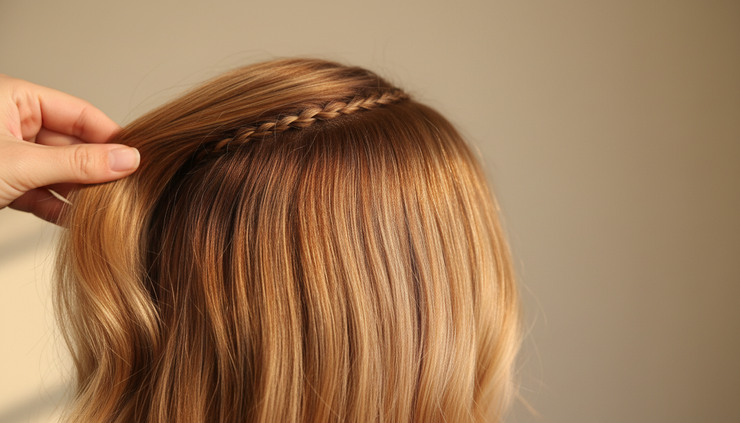
K-tip extensions offer detailed blending strand by strand
K-tip extensions, also called keratin bond extensions, attach small extension strands to small sections of natural hair using a keratin-based bond. The bond is shaped around the hair, creating individual points of attachment.
This method can be helpful for fine hair because the stylist can place tiny pieces exactly where fullness is needed. It can also blend well around layers, sides, and uneven density.
Why k-tips can be a strong option
K-tips move more like natural hair because they are installed in small sections. There is no wide weft, tape panel, or clip. That can make them easier to hide in certain areas.
They can be especially useful for adding subtle fullness rather than a large amount of bulk.
Best uses for fine hair
Custom blending around the face
Filling uneven areas
Creating natural movement
Adding length without wide attachment panels
The drawbacks of k-tips
K-tip installation takes time and should be done by a trained stylist. The bond size and section size must match the strength of the natural hair. If too much extension hair is attached to too little natural hair, it can cause stress.
Removal also matters. Bonds need to be softened properly and slid out without pulling.
Fine hair tips for k-tips
Choose small bonds and a moderate amount of hair. Avoid placing bonds too close to the hairline or part where they may show. Brush gently and separate the bonds with fingers daily to prevent matting at the roots.
How to choose the right color and length
The most natural extensions disappear into the hair. Color and length play a huge role, especially with fine hair because there may be less natural density to cover mismatches.
Match the ends, not just the roots
Extensions sit mostly through the mid-lengths and ends, so the color should match the lower part of the hair. If the roots are darker and the ends are lighter, choose extensions that blend with the ends or use a rooted shade.
For highlighted hair, a mixed shade often looks better than one solid color. Fine hair catches light easily, so flat color can look obvious.
Good color options include:
A rooted shade for lived-in color
A balayage blend for lighter ends
A mixed shade with two close tones
Custom toning by a stylist when needed
If choosing between two shades, the slightly lighter option often blends better into highlighted ends, while the darker option may create visible stripes. Natural light is the best place to check.
Keep length realistic
Length adds weight. On fine hair, very long extensions may separate from natural hair and create a thin-over-thick effect. A modest length increase usually looks fuller and more believable.
If natural hair is chin-length or shoulder-length, jumping to very long hair can require more extension hair than fine strands can comfortably support. A better plan may be to add a few inches and focus on density.
A good rule for fine hair: choose the shortest length that gives the look you want. Full, healthy-looking ends often look more luxurious than extra-long ends that do not blend.
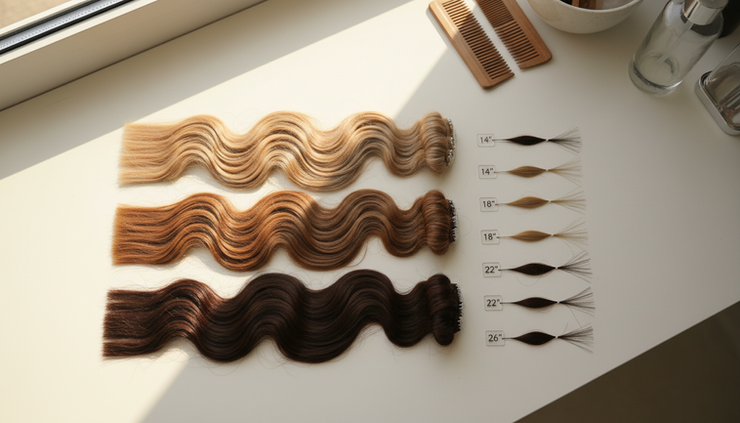
Maintenance keeps fine hair protected
Extensions look best when daily care is simple and consistent. Fine hair tends to tangle faster at the nape and can get oily at the roots, so gentle habits matter.
Brush with support
Use an extension-safe brush or a soft loop brush. Start at the ends and work upward. Hold the hair near the roots or attachment point so brushing does not pull on the scalp.
Brush in the morning, before bed, and before washing. For bonded or hand tied methods, check that the roots are not tangling together.
Wash with care
Use gentle shampoo at the scalp and avoid rubbing the lengths into a knot. Conditioner belongs on the mid-lengths and ends, not directly on tapes, bonds, or bead rows.
Rinse well. Product buildup can make fine hair limp and can affect attachment points.
Dry the roots and attachment areas
Fine hair can air-dry quickly, but extension attachment points often need more help. Leaving tapes, bonds, or rows damp for long periods can lead to tangling or slipping. Blow-dry the root and attachment areas on a comfortable heat setting, then style the lengths.
Sleep in a loose style
A loose braid or low ponytail can reduce friction while sleeping. Use a silk or satin pillowcase if tangling is a problem. Never sleep in clip-ins.
Keep up with appointments
Semi-permanent extensions need maintenance. Tape-ins need to be moved up as hair grows. Hand tied rows need adjustments. K-tips need proper removal and, if desired, a fresh installation.
Waiting too long can cause matting, tension, and breakage. Fine hair responds best to timely care.
Which extension type is best for fine hair
There is no single winner for every head of fine hair. The best choice depends on how often the extensions will be worn and how much maintenance feels manageable.
For occasional use, clip-ins are the easiest starting point. Choose lightweight pieces and remove them before bed.
For everyday fullness with a flat attachment, tape-ins are often a great match. They work well when placed carefully and cared for with the right products.
For soft, flowing volume, hand tied extensions can be beautiful. The install must be gentle, light, and customized.
For detailed blending, k-tip extensions offer the most precise placement. They are a strong option when installed and removed by an experienced stylist.

The safest path is to start with the least weight needed to reach the goal. Fine hair rarely needs the densest set or the longest length to look transformed. It needs the right balance of color, placement, texture, and care.
A beautiful result should feel comfortable, move naturally, and blend from root to end. When extensions support the hair instead of overpowering it, fine hair can look fuller, softer, and completely believable.


Comments