.png)
Why Healthy Hair Starts With a Healthy Scalp at the Head Spa
- The Abode Salon

- 5 days ago
- 8 min read
Healthy hair is usually judged by what we can see: shine, thickness, smoothness, movement, and color. But the part that matters most is often hidden. Hair grows from the scalp, and when the scalp is dry, oily, tight, clogged, irritated, or neglected, the hair can look and feel less healthy long before the ends show obvious damage.
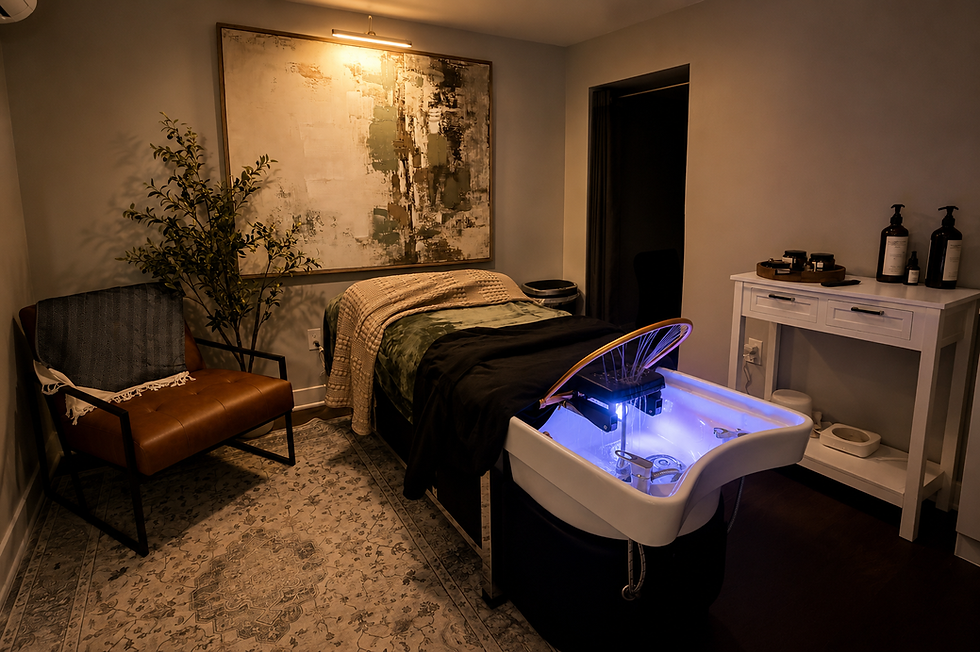
A head spa brings the focus back to the root of hair care. Instead of treating hair as only a strand-by-strand beauty concern, it looks at the scalp as the foundation. That shift matters. A balanced scalp creates a better environment for stronger-looking, softer, more manageable hair.
The scalp is skin, and it needs care too
The scalp is easy to forget because hair covers it. Still, it is skin. It produces oil, sheds dead skin cells, reacts to product buildup, and can become dry or sensitive. Just like the face, it can feel tight, flaky, greasy, congested, or irritated when its balance is off.
Hair care often skips this step. Many routines focus on shampoo, conditioner, masks, heat protectant, and styling products. Those products can help the hair shaft, but they do not always address what is happening at the roots.
A healthy scalp supports hair in a few simple ways:
It helps keep follicles clear of excess oil and debris.
It supports a more comfortable, balanced skin barrier.
It allows natural oils to move through the hair more evenly.
It creates a cleaner base for products to work as intended.
It can reduce the feeling of itchiness, tightness, or heaviness caused by buildup.
This does not mean a head spa can solve every hair concern. Hair shedding, sudden thinning, scaly patches, pain, or persistent irritation should be discussed with a licensed medical professional. But for everyday scalp imbalance, buildup, dryness, and dull-looking hair, scalp care can make a noticeable difference in how hair feels and behaves.
Hair problems often begin at the root
Many common hair frustrations are not only about the ends. They can start at the scalp.
Greasy roots, for example, may come from excess oil, product residue, or washing habits that do not fit the scalp’s needs. Dry flakes may come from dryness, irritation, or buildup that looks like dandruff. Limp hair can happen when the roots are weighed down. Even frizz can feel worse when the scalp is dehydrated and the hair is not receiving enough balanced moisture from root to tip.
That is why a head spa can feel so different from a regular shampoo service. It is slower, more detailed, and more intentional. The goal is not only to cleanse the hair. The goal is to refresh the scalp so the hair has a better starting point.
At a head spa, the practitioner may look for signs such as:
Oiliness at the roots
Dry or flaky areas
Redness or sensitivity
Product buildup near the follicle area
Tension in the scalp, neck, or temples
Hair that feels heavy even after washing
These details help shape the treatment. A scalp that feels oily and congested may need a different approach than a scalp that feels tight and dry. Good scalp care is not one-size-fits-all.

What a head spa does for scalp health
A head spa treatment can vary by salon or spa, but most services combine cleansing, massage, hydration, and relaxation. Each step has a purpose.
A deeper cleanse removes buildup
Even a good shampoo may not remove everything. Styling creams, dry shampoo, sweat, sebum, hard water minerals, and pollution can gather near the scalp over time. When that buildup stays in place, hair may look flat or feel coated.
A scalp-focused cleanse helps lift away residue without treating the scalp roughly. The aim is clean and refreshed, not stripped. Harsh scrubbing can leave the scalp feeling irritated, so a skilled head spa service uses steady, controlled pressure and products suited to the scalp’s condition.
Massage supports comfort and circulation
Scalp massage is one of the reasons people love head spa treatments. It feels good, but it also serves a practical role.
Massage helps loosen debris, relax tight areas, and bring attention to the scalp instead of just the hair. The pressure can help release tension around the temples, crown, and neck, especially for people who wear tight hairstyles, sit for long hours, or clench their jaw.
Healthy circulation is part of normal skin function. While massage should not be treated as a cure for hair loss, it can support a more relaxed, comfortable scalp environment.
Steam softens and prepares the scalp
Many head spa treatments use warm steam. Steam can help soften buildup and make the scalp feel more receptive to cleansing and conditioning steps. It also adds to the calming experience.
Warmth matters here. The scalp should feel soothed, not overheated. Too much heat can make sensitive skin feel worse, so a good treatment uses steam gently.
Hydration calms a dry or tight scalp
A dry scalp can make hair feel rough right from the roots. Hydrating scalp treatments help restore comfort and reduce that tight, thirsty feeling. Depending on the service, the practitioner may use lightweight scalp serums, soothing masks, or conditioning treatments designed for the skin beneath the hair.
The key is balance. Heavy oils are not always the answer, especially for fine hair or oily scalps. A head spa can help match the treatment to the actual scalp condition instead of guessing.
The scalp and hair shaft work together
Hair that has already grown out is not alive tissue, so it cannot heal itself the way skin can. Once the hair shaft is damaged by heat, bleach, friction, or rough handling, it needs protection and conditioning to look smoother. Severely damaged ends may need a trim.
The scalp works differently. It is living skin. It can respond to better cleansing, gentler habits, hydration, and less irritation. That is why scalp care can change the feel of new growth and the condition at the roots.
When the scalp is balanced, hair often looks better in practical ways:
Roots feel lighter and cleaner.
Hair may hold volume more easily.
The scalp feels less itchy or tight.
Products spread more evenly.
Wash days may feel more effective.
Hair has a fresher, softer feel from the start.
Think of it like caring for soil in a garden. The visible plant matters, but the soil sets the conditions. If the soil is compacted, dry, or overloaded, the plant struggles. Hair care works in a similar way. The scalp is the ground your hair grows from.

Signs your scalp may need extra attention
A head spa can be especially helpful when the scalp feels out of balance. Some signs are subtle. Others show up in how the hair behaves after washing.
Common signs include:
Roots that feel oily too quickly
If hair looks greasy by the next day, the scalp may need a better cleansing rhythm or a lighter product routine.
Flakes that return after washing
Flakes can come from several causes, including dryness, buildup, or dandruff. If flakes are persistent, severe, or paired with redness, a professional medical opinion is the safer choice.
Hair that feels heavy or coated
This often happens when styling products, dry shampoo, oils, or minerals collect near the roots.
An itchy or tight feeling
The scalp may be dry, irritated, or reacting to a product. Fragrance, strong clarifying shampoos, and frequent heat can all play a role.
Flat roots with dry ends
This combination can happen when the scalp is oily but the lengths are dehydrated. Treating every part of the hair the same way may make the imbalance worse.
A head spa helps by separating scalp needs from hair-length needs. The roots may need cleansing and light hydration. The ends may need conditioning and protection. Both can be true at the same time.
A head spa treatment should feel calm, thorough, and personalized. While every service is different, a typical visit may include a short consultation, scalp analysis, cleansing, massage, steam, treatment products, and a final rinse or blow-dry.
A consultation does not need to be complicated. The practitioner may ask about:
How often the hair is washed
Whether the scalp feels oily, dry, itchy, or sensitive
What styling products are used
Whether dry shampoo is part of the routine
Recent color, chemical services, or heat styling
Any scalp conditions or sensitivities
This helps prevent over-cleansing or over-conditioning. For example, someone with a sensitive scalp may need fragrance-free or gentle products. Someone with heavy buildup may benefit from a more clarifying cleanse.
The best head spa experiences are not aggressive. The scalp should not feel scratched, burned, or raw. A refreshed feeling is good. Discomfort is not.
How to support scalp health at home
A head spa can reset the scalp, but daily habits keep the results going. Small changes can make wash days work better and reduce buildup between visits.
Wash the scalp, not just the hair
Shampoo belongs mainly at the scalp. Apply it to the roots, massage with fingertips, and let the rinse carry the cleanser through the ends. The lengths usually do not need rough scrubbing.
Use the pads of the fingers, not nails. Nails can scratch the scalp and cause irritation.
Rinse longer than you think
Leftover shampoo or conditioner can make roots feel itchy, flat, or coated. Rinse until the scalp feels clean and the water runs clear. Thick hair may need sectioning with fingers to reach the scalp fully.
Be careful with dry shampoo
Dry shampoo is useful, but it is not a replacement for washing. It absorbs oil and adds texture, but it can build up when used often. If dry shampoo is a regular part of the routine, scalp cleansing becomes even more important.
Match products to the scalp
A rich moisturizing shampoo may help a dry scalp but weigh down oily roots. A strong clarifying shampoo may refresh buildup but leave a sensitive scalp feeling tight. Choose products based on what the scalp needs, not only what the ends look like.
Protect the scalp from stress
Tight ponytails, high-tension braids, heavy extensions, frequent heat, and rough brushing can stress the scalp. Give the roots breaks when possible. Looser styles and gentle detangling can help keep the scalp more comfortable.
There is no single schedule that works for everyone. The right timing depends on scalp type, lifestyle, product use, and hair texture.
Some people enjoy a head spa monthly as part of regular maintenance. Others book seasonally, especially when the scalp feels dry in winter or oily during warmer months. People who use lots of styling products may benefit from more frequent scalp resets.
A good rule is to pay attention to how the scalp feels two to four weeks after treatment. If roots stay lighter, the scalp feels calmer, and wash days are easier, the timing may be right. If buildup returns quickly, the at-home routine may need adjusting too.
A head spa is not only a treat. It can be a useful part of a healthy hair routine, especially when paired with gentle daily habits.

The real benefit is a better foundation
Healthy-looking hair does not start with the most expensive mask or the newest styling product. It starts with the skin beneath the hair. When the scalp is clean, balanced, and comfortable, the hair has a better foundation from the root.
A head spa brings that foundation into focus. It clears away buildup, supports scalp comfort, adds hydration where needed, and turns routine hair care into a more thoughtful process. The result is hair that feels fresher at the roots, softer through the lengths, and easier to care for between wash days.
For the healthiest-looking hair, start where the hair starts. Care for the scalp first, and the rest of the routine has a much better chance to work.


Comments