.png)
What Is a Headspa? Everything You Need To Know
- The Abode Salon

- Jul 30
- 9 min read
A good scalp treatment can feel like someone turned the volume down on your whole nervous system. That is the appeal of a headspa, a service that blends scalp care, massage, cleansing, and relaxation into one deeply soothing appointment.
Headspa treatments have roots in Japanese and Korean beauty traditions, where scalp health is treated as part of overall hair care. The idea is simple: healthy-looking hair starts at the scalp. A headspa focuses on removing buildup, improving comfort, supporting circulation through massage, and giving the mind a real pause.
For anyone curious about wellness, self-care, or better hair days, a headspa sits somewhere between a facial, a massage, and a salon treatment. It is practical, but it also feels indulgent in the best way.
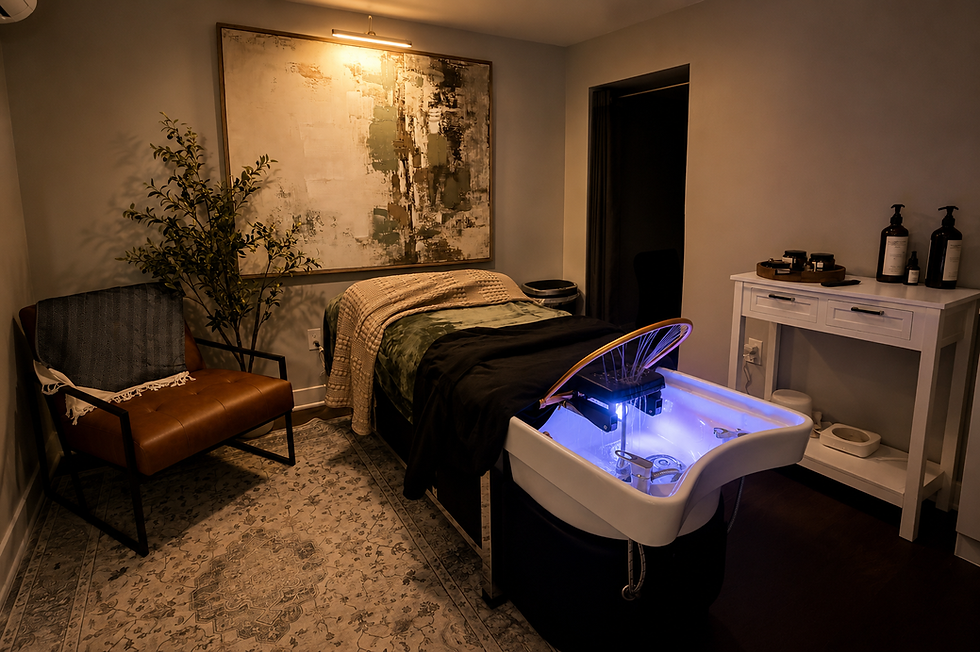
A headspa is a scalp-focused spa treatment
A headspa is a professional treatment designed to cleanse, massage, and care for the scalp and hair. Most sessions take place at a salon, spa, or wellness studio using a reclining shampoo chair or a treatment bed with a basin.
A typical appointment may include:
A scalp consultation
Gentle brushing or scalp analysis
Oil, serum, or exfoliating treatment
Scalp massage
Steam or warm towels
Shampoo and rinse
Conditioning treatment or hair mask
Blow-dry or simple styling, depending on the service
Our salon uses magnifying cameras to show the scalp before and after cleansing. Others keep the experience more low-tech and sensory, with warm water, aromatherapy, and slow massage.
The main difference between a headspa and a standard shampoo is the level of attention. A shampoo cleans the hair. A headspa treats the scalp as the main event.
Many beauty professionals compare the scalp to facial skin. It has oil glands, pores, dead skin cells, and its own balance. When product buildup, excess oil, dryness, or irritation gets in the way, hair can look less fresh and feel harder to manage.
A headspa does not replace medical care for scalp conditions. Persistent flaking, pain, hair loss, sores, or severe itching should be checked by a dermatologist. For general scalp care and relaxation, though, it can be a smart addition to a self-care routine.
The relaxation benefits are a major part of the experience
The first thing many people notice during a headspa is not their hair. It is the sense of release.
Scalp massage can feel unusually relaxing because the head, neck, temples, and jaw often hold tension. Slow, rhythmic touch gives the body a cue to settle. Warm water and steam add to that effect, especially when the treatment room is quiet and the pace is unhurried.
A headspa may help support relaxation in several ways:
Less muscle tension
Gentle pressure around the scalp, neck, and shoulders can ease tightness from stress, sleep position, or long periods looking down at a phone.
A calmer mind
The repetitive motion of massage, warm water, and quiet surroundings can create a meditative effect.
Better self-care consistency
A scheduled appointment gives people permission to stop, rest, and receive care.
A sensory reset
Scent, temperature, touch, and sound work together. That full-body sensory experience is part of why headspa treatments feel different from a quick wash.
Many licensed cosmetologists and scalp specialists view the treatment as a two-part service: scalp maintenance paired with nervous system relaxation. The massage is not just a pleasant extra. It is central to the experience.
A common client response after a first visit is simple: “I did not realize how tense my scalp and jaw felt until the massage started.” That kind of reaction helps explain why headspas have become popular with people who want wellness benefits without committing to a full-body spa day.

The hair and scalp benefits can be practical too
Relaxation may bring people in, but scalp and hair benefits often bring them back.
A headspa can support hair health by improving the daily environment of the scalp. This matters because the scalp can collect sweat, sebum, dry shampoo, styling products, hard water minerals, and environmental debris. Over time, buildup may leave hair feeling flat, greasy, itchy, or dull.
A well-done headspa may help with:
Removing buildup
Clarifying steps can lift away stubborn residue that regular shampoo may not fully remove. This is especially useful for people who use dry shampoo, gels, oils, heavy conditioners, or heat protectants often.
After buildup is removed, hair may feel lighter at the roots and easier to style.
Balancing oiliness
People with oily scalps often shampoo frequently, yet still feel greasy by the next day. A headspa can help by cleansing more thoroughly and using products chosen for scalp balance rather than just hair texture.
The goal is not to strip the scalp. Over-cleansing can make discomfort worse. A skilled provider should choose a gentle but effective approach.
Soothing dryness or tightness
Dry scalps can feel tight, flaky, or uncomfortable. Hydrating scalp serums, steam, and gentle massage may help the scalp feel more comfortable. The right treatment depends on whether the issue is true dryness, product buildup, sensitivity, or a skin condition.
Supporting circulation through massage
Massage increases local blood flow temporarily. That can bring a refreshed feeling to the scalp and may support the overall care environment for hair follicles. Claims that a headspa can regrow hair should be treated with caution. Hair growth is complex and can involve hormones, genetics, nutrition, stress, medication, and medical conditions.
Improving shine and softness
Many headspa services end with a conditioner, mask, or gloss-like treatment. These hair-focused steps can smooth the cuticle, reduce roughness, and leave the hair looking shinier.
The best results often come from matching the products to both scalp and hair. For example, someone with an oily scalp and dry ends may need clarifying at the roots and rich moisture only through the mid-lengths and ends.
Different headspa treatments offer different results
Not every headspa is the same. Some are built for deep relaxation, while others focus on cleansing, scalp comfort, or hair repair. Knowing the main types makes it easier to book the right service.
Treatment type | Best for | What to expect |
Japanese-inspired headspa | Relaxation, scalp cleansing, sensory care | Slow massage, warm water, scalp treatment, steam, careful rinsing |
Korean scalp treatment | Scalp analysis, oiliness, buildup | Scalp camera in some studios, exfoliation, targeted serums |
Clarifying headspa | Product buildup, dull roots, heavy styling products | Deep cleanse, exfoliating scrub or clarifying shampoo, lightweight finish |
Hydrating headspa | Dryness, tight scalp, dry hair lengths | Moisturizing scalp treatment, steam, hair mask |
Aromatherapy headspa | Stress relief, restful experience | Essential oil blends or scented products, calming massage |
Hair repair headspa | Dry, color-treated, or heat-styled hair | Bonding or protein-style mask, moisture treatment, gentle scalp care |
Medical-adjacent scalp care | Flaking, itch, sensitivity | Careful assessment and gentle products, with referral to a dermatologist when needed |
Japanese-inspired headspa treatments
These are often the most spa-like. The rhythm is slow, with careful massage and a focus on comfort. Warm towels, steam, and layered cleansing steps are common. This type is a strong choice for stress relief and general scalp maintenance.
Korean scalp treatments
Korean-inspired scalp care often feels more diagnostic. Some studios use a scalp camera to look closely at oil, flakes, clogged follicles, or dryness. The treatment may include exfoliation, tonics, and targeted scalp products.
This can be helpful for people who want to understand what is happening at the root level.
Clarifying and detox-style treatments
These treatments focus on removing buildup. The word “detox” is often used in beauty marketing, but the practical meaning is usually deep cleansing. A clarifying headspa can be useful after heavy product use, swimming, hard water exposure, or long stretches between salon visits.
Hydrating and soothing treatments
Hydrating headspas are gentler and more comfort-focused. They may use calming ingredients, moisture-rich masks, and steam. This option can suit dry scalps, coarse hair, curls, or anyone whose hair feels rough and thirsty.
Premium ritual treatments
Some spas offer longer headspa rituals that include neck, shoulder, hand, or facial massage. These are less about solving a scalp issue and more about full relaxation. They can be ideal before a vacation, during a stressful season, or as a monthly reset.

Choose the right headspa by starting with your scalp goal
The best headspa is not always the longest or most expensive one. It is the one that fits your scalp, hair, comfort level, and reason for booking.
Start with one clear goal.
If your scalp feels oily, choose a clarifying or balancing treatment. If your main issue is stress, choose a massage-heavy Japanese-inspired service. If your hair feels dry and rough, look for hydration and repair. If you have flakes or itching, choose a provider who takes scalp sensitivity seriously and does not promise a quick cure.
Match the service to your hair type
Different hair textures need different handling.
Fine hair can get weighed down by heavy oils or masks. Curly and coily hair may need more moisture, gentle detangling, and careful product placement. Color-treated hair needs products that protect tone and avoid harsh stripping. Extensions, braids, locs, and protective styles require special care, so ask before booking.
A good provider will ask about your hair history before applying products.
Ask what is included
Headspa menus can vary a lot. Before booking, check whether the service includes:
Scalp analysis
Exfoliation
Steam
Massage length
Shampoo and conditioner
Hair mask
Blow-dry
Styling
Add-on treatments
This matters because a “60-minute headspa” at one place may mean a full ritual, while another may include drying time within that hour.
Look for training and cleanliness
A headspa should feel clean, calm, and professional. The provider should use sanitized tools, fresh towels, clean basins, and products that are appropriate for scalp use.
Look for a licensed cosmetologist, esthetician, massage therapist, or trained scalp care provider, depending on local rules and the type of service offered. If a salon advertises scalp analysis or treatment for specific scalp concerns, the staff should explain what they can and cannot address.
A trustworthy provider will not diagnose medical conditions unless they are qualified to do so. They may suggest seeing a dermatologist if symptoms look severe or persistent.
Be honest about sensitivities
Tell the provider if you have:
Sensitive skin
Allergies to fragrance or essential oils
Psoriasis, eczema, seborrheic dermatitis, or similar conditions
Recent scalp irritation
Recent color, bleach, relaxer, or keratin treatment
Hair extensions or a sensitive hairline
This helps them adjust pressure, product choice, water temperature, and exfoliation.
Read reviews with the right lens
Reviews can reveal the real personality of a headspa. Look for comments about the massage quality, cleanliness, communication, and whether the treatment felt rushed.
A useful testimonial often sounds specific. For example, a client may mention that the provider adjusted pressure, explained the scalp analysis, or chose a lighter conditioner for fine hair. Vague praise is nice, but details are more helpful.
One common first-time client takeaway goes something like this:
“I booked for relaxation, but my scalp felt cleaner than it had in months. The best part was that the provider explained what they were using and did not rush the massage.”
That kind of experience points to what a good headspa should provide: comfort, care, and clear communication.
What to expect before, during, and after an appointment
A first headspa appointment is usually simple, but knowing the flow can make it more enjoyable.
Before the visit, arrive with your hair in a normal state if possible. It does not need to be freshly washed. In fact, regular product use can help the provider understand your scalp better. Avoid heavy oiling right before the appointment unless the spa asks you to.
During the visit, the provider may ask about scalp concerns, hair routine, allergies, and stress level. Some will part the hair to inspect the scalp. Others may use a camera.
The treatment itself may include warm water, massage, steam, cleansing, conditioning, and a final rinse. Pressure should feel good, not painful. If anything burns, stings, pulls, or feels too hot, speak up.
After the visit, hair may feel softer, lighter, or more lifted at the root. The scalp may feel refreshed and less tight. Some people prefer to avoid heavy styling products for a day or two so they can enjoy the clean feeling longer.
How often to book depends on the goal. For relaxation, monthly or occasional visits may be enough. For buildup or oiliness, a provider may suggest a regular schedule. For sensitive scalp concerns, gentler and less frequent care may be better.

A headspa is best when it feels personal
The right headspa should not feel like a one-size-fits-all treatment. It should match the scalp, hair, and reason for booking.
Choose a relaxation-focused ritual if stress relief is the main goal. Choose a clarifying service if roots feel heavy or coated. Choose hydration if the scalp feels tight and the hair feels dry. For flakes, itching, burning, or sudden hair shedding, start with a dermatologist or ask the spa whether they are comfortable working with your concern.
A headspa can be a small luxury, but it is also a practical way to care for the part of hair health that often gets ignored. When the provider listens, uses the right products, and takes their time, the result is more than clean hair. It is a calmer scalp, a clearer head, and a self-care ritual that actually earns its place on the calendar.
Book Your Headspa Today At Abode Salon in New London, MN


Comments