.png)
How a Head Spa Can Support Hair Growth for Thinning Hair
- The Abode Salon

- Aug 6
- 9 min read
Hair thinning can feel personal, frustrating, and hard to understand. One month the part looks wider. The next, more strands show up in the shower drain. While a head spa is not a cure for hair loss, it can be a supportive scalp-care treatment for people who want to create a healthier environment for hair growth.
A head spa usually combines scalp analysis, cleansing, exfoliation, massage, steam, and targeted conditioning. Think of it as a facial for the scalp. It focuses on the skin where hair grows, not just the hair you can see.
That matters because hair growth starts below the surface. Follicles need a balanced scalp environment, steady care, and time. A thoughtful head spa can help by reducing scalp buildup, improving comfort, supporting circulation through massage, and making it easier to keep the scalp clean without stripping it.
This article is for general education only. Hair loss can have many causes, including genetics, hormones, nutrition, stress, scalp conditions, medications, and medical issues. If thinning is sudden, patchy, painful, or paired with itching, scaling, or redness, a dermatologist or qualified health professional should evaluate it.
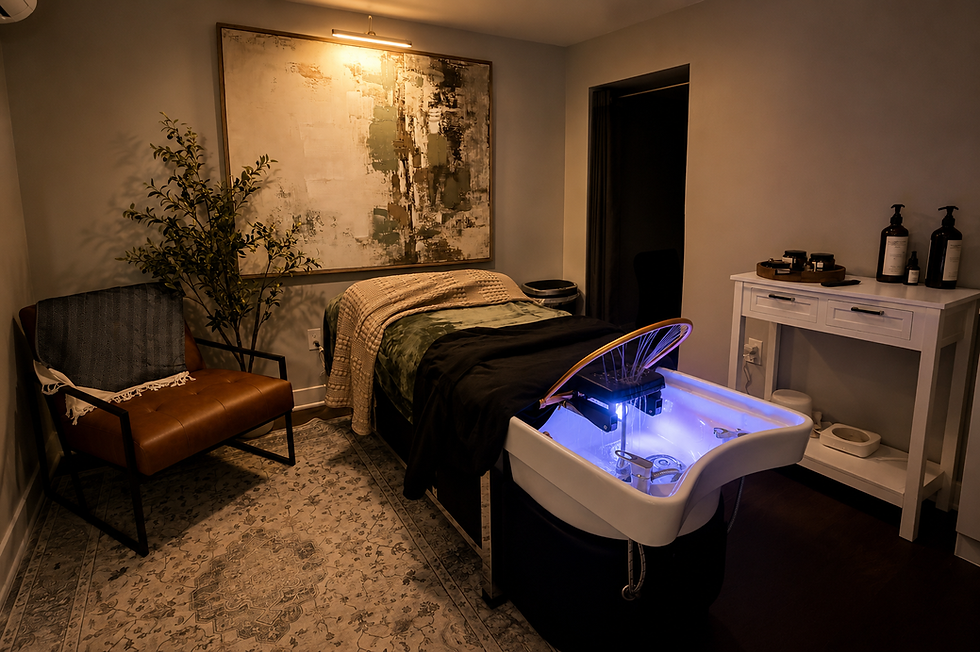
Hair is often treated as the main problem when thinning begins, but the scalp deserves just as much attention. The scalp is living skin. It produces oil, sheds dead skin cells, reacts to irritation, and can become dry, inflamed, congested, or sensitive.
Each hair grows from a follicle under the skin. The visible strand is made of keratin, but the follicle is where the growth cycle happens. Hair moves through phases of growth, transition, rest, and shedding. Some shedding is normal every day. Thinning becomes more noticeable when more hairs leave the growth phase, when follicles shrink, or when breakage makes the hair look less dense.
A head spa cannot change genetics or reverse every type of hair loss. What it can do is support the skin environment around the follicles. That can be valuable when the scalp feels oily, tight, flaky, itchy, or coated with product residue.
A well-cared-for scalp can help hair look fuller in a few practical ways:
Cleaner roots
Removing excess oil and residue can give hair more lift at the scalp.
Less visible flaking
Gentle exfoliation and cleansing can reduce flakes that make thinning areas more noticeable.
Better product contact
A clean scalp may help topical scalp products spread more evenly.
Less scratching and irritation
Calming the scalp can reduce habits that lead to breakage or discomfort.
Healthy hair growth takes months, not days. A head spa should be seen as one supportive piece of a hair-care routine, not a quick fix.
A head spa treatment can vary by provider, but most sessions follow the same general path. The goal is to assess the scalp, cleanse it thoroughly, and leave both scalp and hair feeling balanced.
Scalp assessment
Many treatments begin with a close look at the scalp. Some spas use a magnifying camera, while others rely on a visual and touch-based assessment. The provider may look for oiliness, dryness, flakes, redness, buildup, or sensitivity.
This step helps guide the products and pressure used during the session. A dry, tight scalp needs a different approach than a scalp with heavy oil and styling product residue.
Pre-cleanse or oil-balancing step
Some head spas begin with a pre-cleanse to loosen oil, sunscreen, dry shampoo, and styling products. This matters because buildup can sit close to the roots and make the hair look flatter.
For thinning hair, heavy buildup can be especially noticeable. Even fine residue can weigh strands down and make sparse areas look more obvious.
Gentle exfoliation
The scalp sheds skin like the rest of the body. When flakes, oil, and products collect, the scalp can feel coated or itchy. A head spa may use a mild scalp scrub, enzyme product, or exfoliating solution to loosen buildup.
This should feel comfortable, not harsh. Aggressive scrubbing can irritate the scalp and damage fragile hair. For someone with thinning hair, gentle technique is essential.
Massage
Massage is one of the best-known parts of a head spa. It can help relax scalp tension, improve comfort, and temporarily increase blood flow to the area being massaged.
Research on scalp massage and hair growth is still limited, so it should not be treated as a guaranteed growth treatment. Still, regular, gentle massage may support scalp health and encourage consistency with scalp care. It can also reduce stress for some people, which matters because stress can affect hair shedding in certain situations.
Steam and cleansing
Warm steam can help soften buildup and make cleansing feel more comfortable. After that, the scalp and hair are shampooed, often with products chosen for the scalp’s condition.
A good cleanse should leave the scalp fresh without making it feel tight or stripped. That balance is key. Over-cleansing can trigger dryness and irritation, while under-cleansing can leave oil and residue behind.
Conditioning and finishing
The service often ends with conditioner, a hair mask, scalp serum, or light leave-in product. For thinning hair, lighter formulas are usually better near the roots. Heavy creams and oils can collapse volume and make hair look thinner.

How a head spa may help thinning hair look and feel better
The phrase “hair growth” can mean different things. Some people want more new hairs. Others want the hair they have to look thicker, cleaner, and less weighed down. A head spa may help most with the second goal, while supporting the conditions needed for the first.
It helps remove buildup that can flatten roots
Fine or thinning hair shows buildup quickly. Dry shampoo, hairspray, thick conditioners, sweat, sebum, and pollution can collect around the scalp. This can make hair separate into oily clumps and expose more scalp.
A deep but gentle cleanse can restore movement at the roots. The result is not new hair overnight, but it can make existing hair look fuller because strands are not stuck together or weighed down.
It can calm a stressed or uncomfortable scalp
An irritated scalp can lead to scratching, rubbing, and over-washing. All of those can worsen breakage or make shedding feel more alarming. A soothing head spa may help reduce the cycle of discomfort.
Look for calming ingredients such as aloe, panthenol, green tea, or mild hydrating agents if the scalp is sensitive. Avoid strong fragrances, harsh scrubs, and intense tingling products if irritation is already present.
It supports better scalp hygiene
Scalp hygiene is not about washing as often as possible. It is about cleansing in a way that matches oil production, exercise, styling habits, and scalp condition.
A head spa can reset the scalp and help identify what your routine may be missing. For example, someone who uses dry shampoo several times a week may need a periodic clarifying step. Someone with dryness may need gentler shampoo and less heat.
It encourages regular scalp attention
Hair thinning can create anxiety, and that anxiety sometimes leads to either overdoing everything or avoiding the issue entirely. A head spa creates a structured moment to care for the scalp without panic.
The benefit is partly practical and partly behavioral. When scalp care feels calming, it becomes easier to maintain a routine.
It may pair well with dermatologist-recommended treatments
Some people use dermatologist-recommended treatments such as topical minoxidil or prescription options. A head spa does not replace those treatments. It may support them by keeping the scalp clean and comfortable, as long as the timing and products do not interfere.
If using a medicated topical, ask a dermatologist how to schedule cleansing, exfoliation, and spa services. Some active ingredients can irritate the scalp if combined with strong exfoliation.
A responsible head spa provider should be clear about limits. Thinning hair has many possible causes, and not all of them respond to scalp care.
A head spa cannot:
Regrow hair permanently lost from scarring alopecia
Reverse genetic hair loss on its own
Correct iron deficiency, thyroid problems, or hormonal causes
Stop medication-related shedding without medical guidance
Replace diagnosis or treatment for scalp disease
Guarantee new growth after one session
This does not make the service useless. It simply means expectations need to stay realistic.
A head spa is best viewed as supportive care. It may improve scalp comfort and the appearance of hair fullness, but medical hair loss often needs medical support.
Who may benefit most from a head spa
A head spa may be especially helpful for people whose thinning hair comes with scalp concerns or styling buildup. It can be a good fit when the scalp feels oily soon after washing, when roots lie flat, or when flakes make the part line more visible.
It may also appeal to people who feel tense through the scalp, temples, or neck. The massage component can make scalp care feel less clinical and more restorative.
People who may benefit include those with:
Fine hair that gets weighed down easily
Product buildup from dry shampoo, sprays, gels, or leave-ins
Mild flaking not caused by a serious scalp condition
Oily roots and dry ends
Stress-related scalp tension
A desire for a regular scalp-care reset
For active shedding, a head spa should be gentle. Hair that is already shedding can feel alarming during washing because loose hairs come out all at once. That does not always mean the treatment caused the shedding. Still, rough handling can increase breakage, so the provider should use light tension and avoid tugging.
Who should be cautious or skip it for now
Some scalp symptoms need medical care before spa care. A relaxing treatment can make certain conditions worse if the wrong products or pressure are used.
Consider seeing a dermatologist before booking a head spa if you have:
Sudden or severe shedding
Round or patchy bald spots
Burning, pain, or sores on the scalp
Thick scaling, crusting, or bleeding
Signs of infection
Hair loss after starting a new medication
Hair loss after illness, surgery, childbirth, or major stress
A known scalp condition that is currently flaring
People with very sensitive skin or allergies should ask for ingredient lists before treatment. Fragrance, essential oils, menthol, and strong exfoliants can trigger irritation for some scalps.
If the scalp is inflamed, the best treatment may be no massage, no scrub, and no steam until a clinician gives guidance.
How often to get a head spa for thinning hair
Frequency depends on scalp type, budget, and hair-care habits. Most people do not need an intensive head spa every week. Too much cleansing, exfoliating, or massaging can irritate the scalp.
A practical starting point is once every 4 to 6 weeks, then adjust based on how the scalp responds. Someone with heavy product use or oily roots may prefer more frequent visits. Someone with dryness or sensitivity may do better with occasional treatments and a gentle home routine.
Between appointments, keep scalp care simple:
Wash often enough to keep the scalp comfortable
Use conditioner mainly on mid-lengths and ends if hair is fine
Limit heavy oils at the roots unless recommended
Rinse thoroughly after shampoo and conditioner
Use dry shampoo sparingly and wash it out well
Avoid tight styles that pull on fragile hair
Protect the scalp from sun exposure where hair is sparse
Consistency beats intensity. A gentle routine done regularly will usually serve thinning hair better than harsh treatments done in bursts.
What to ask before booking a head spa
Not every head spa is designed for thinning hair. Some focus more on relaxation, while others specialize in scalp care. Before booking, ask a few direct questions.
Good questions include:
Do you adjust pressure for active shedding or fragile hair?
What type of exfoliation do you use?
Can you avoid heavy oils or rich masks near the roots?
Do you offer options for sensitive scalps?
Will the treatment include scalp analysis?
Can I skip fragrance or essential oils?
How do you sanitize combs, brushes, and tools?
The right provider should welcome these questions. They should also avoid promising guaranteed regrowth. Be careful with any service that claims to “wake up dead follicles” or cure hair loss without medical evaluation.
How to support results at home
A head spa can give the scalp a reset, but home care keeps the benefits going. The goal is to keep the scalp clean, calm, and free from heavy buildup.
Start with a shampoo that fits the scalp, not just the hair ends. If the scalp is oily, a gentle clarifying shampoo used occasionally may help. If the scalp is dry or sensitive, choose a mild, fragrance-light formula.
Condition carefully. Apply conditioner from the mid-lengths down if the roots get flat. For curls, coils, or very dry textures, root conditioning may still be helpful, but use the lightest amount that keeps the scalp comfortable.
Be careful with oils. Some oils can soften hair and reduce friction, but heavy oiling on the scalp can worsen buildup for some people. If using scalp oils, wash them out thoroughly and stop if itching or flaking increases.
Use scalp massage gently. Fingertips or a soft silicone brush can help loosen buildup, but pressure should stay light. Massage should not hurt, tangle the hair, or leave the scalp sore.
Track changes with patience. Hair growth is slow, and shedding can fluctuate. Instead of checking the mirror every day, take photos in the same lighting once a month. Look for changes in part width, density at the hairline, scalp comfort, and breakage.
The takeaway for thinning hair
A head spa can support hair growth by caring for the scalp, where healthy hair begins. It may help remove buildup, calm irritation, improve the look of volume at the roots, and make scalp care easier to maintain.
The key is realistic expectation. A head spa is not a medical cure for hair loss. It works best as part of a bigger plan that may include a gentle home routine, nutrition support, stress management, and medical evaluation when needed.
For thinning hair, the best head spa is gentle, scalp-focused, and honest about what it can do. When the scalp feels cleaner, calmer, and better cared for, the hair has a stronger foundation to look and feel its best.


Comments